Follow me on Twitter

Sunday, 13 March 2011

Match Report: Roma 2-0 Lazio

Is there a more fiery, important and tense Italian football derby than the Derby della Capitale? Sure the Milan derby is more illustrious, but the Rome derby means so much to the fans that some supporters would use laser pens to ensure that their side receives all three points in the battle of the capital.
But more on that later.
The derby was an intense game, featuring two red cards, a penalty and a bare chested Roman running celebrating fanatically. And all of this occurred in the last few minutes. But what about the tactics of this game? After all, it is hard to not be enthralled by the ensuing action of any derby and neglect the tactics of the game, if there were any. 
This game showed how Roma struggle to defend wide players, but also how big players who regularly fail to show up throughout the season, such as De Rossi and Totti, never forget to perform for the big derby.


Starting Line Ups:


Roma:
32 - Doni
29 - Nicolás Burdisso
5 - Phillipe Mexes
4 - Juan
17 - John Arne Riise
7 - David Pizarro 
16 - Daniele De Rossi
94 - Jérémy Menez
20 - Simone Perrotta
9 - Mirko Vučinić
10 - Francesco Totti


Under Ranieri, Roma played like many Italian teams and rarely strayed from their tried and tested 4-3-1-2. Vicenzo Montella, however, has brought a sense of upheaval in a tactical sense, introducing a 4-2-3-1, similar in fact to the 'strikerless' formation Montella played under with Luciano Spalletti at the helm. 


Totti didn't play as far forward as a normal striker, but he definitely did not play as an TrequartistaVučinić played to the left of Totti, moving around the area between him and the touchline. 


On the opposite flank, however, Menez had much more of a free role. At the beginning of the game, Menez kept to the right flank, contrary to how he normally plays for Roma. This made Menez ineffective as he works best when cutting in and playing on the right flank, he would cut into on his weaker, left foot. Later on though, he would start to buzz between the flanks as if he were a bee hesitating over which flank he would call his hive. 


Marco Borriello was kept on the bench, possibly a reaction by Montella over his hysterical actions against Shakhtar Donetsk in midweek, after he took a penalty, against his manager's orders, and missed it.


Burdisso was effectively a centre back playing wide on the ride and hence didn't provide enough attacking verve down that side. This, however, would work to Roma's advantage.  


Lazio:
86 - Fernando Muslera
2 - Stephan Lichtsteiner
13 - Guglielmo Stendardo
20 - Giuseppe Biava
26 - Ştefan Radu
24 - Cristian Ledesma
8 - Hernanes
11 - Matuzalém
77 - Giuseppe Sculli
10 - Mauro Zárate
22 - Sergio Floccari


Lazio played a similar formation to Roma, with three centre midfielders patrolling the ball. 


The difference between the two sides, however, was how Lazio used wide players more effectively. Unlike Roma, Lazio played with an out-and-out winger in Sculli and a striker who was much more disciplined in sticking out wide in Zárate.


Lazio also had a target man type player in Floccari, so they were much more enthusiastic in sending the ball up forward.


Ledesma was the enforcer in midfield, with the Brazillian duo of Matuzalém and Hernanes spreading the ball out wide. Lichsteiner provided a lot of effort going forward, but without much product.


Opening Minutes: Threats from Deep


For a Serie A match, the game started with a lot of enthusiasm and fast paced balls; the players being urged on by the loud fans. Lazio had the first chance of the game when Matuzalém fired a long range shot wide after the ball fell to him kindly after a number of deflections from a corner. One minute later on, however, Matuzalém was outdone by Pizarro, who after receiving a pass from De Rossi 35 yards out, controlled the ball and fizzed an unstoppable shot onto Muslera's crossbar. 


After those two long-range strikes, the game slowed down as more and more fouls started building up. Three yellow cards were given out in the first half, showing how much the players abandoned pre-match plans and started playing more sporadically. Hence, the game was slow with many breaks in the play.


During the first half, Roma were more inclined to build the ball up from the back, playing neat balls through the middle. Many times however, they would out do it, playing a wrong pass or miss-control the ball. One of the main reasons why plenty of teams play direct football is because short passing results in more passes being played, and more passes means that there is a greater chance of making a mistake. This was evident by the play Roma were showing as they lost the ball lots of times.


In contrast, Lazio played more directly, bringing the ball up to Floccari to hold up or introducing the ball to one of their wingers. The defensive nature of Burdisso, however, negated the trickery of Zárate on the left, and the first half ended in a stalemate.


Second Half: Lazio Improves


After half time, Lazio started to play better football, out running Roma on the wings. The game opened up and this suited Lazio better as they were the quicker, more mobile team. The biancocelesti also started to cross the ball in more, and Floccari had chances to head the ball in due to Roma's vulnerability out wide. 


Roma had their chances as well. By playing little balls in to attack, Juan found himself with the ball after a pull-back by Menez, only to see Ledesma dispossess him by swiping the ball cleanly out under his feet. 


Late in the Game: Lots of incidents


The notorious green laser

As the subtitle suggests, the closing stages of the game were full of drama. Roma, apart from the Juan chance, were shut out for most of the second half, mainly through tough defense and Hernanes becoming more influential. On the 70' minute, however, they found themselves with a free kick only twenty yards out. Only one player was ever going to take that strike: Totti. A Roma player through and through, the child of Rome lived for derbies against Lazio. An idol of the Roma supporters, he hated Lazio as much as he loved Roma. 


Before he took the kick however, Muslera's eyesight was obstructed. And it wasn't just by the humongous wall Lazio had put up. From the crowd, a Roma fan was shining a green laser into his eyes. Then Totti struck the ball. Bang. The ball swerved through the Lazio wall and under Muslera's body with such force that that alone could have been an excuse for Muslera not saving the ball. But that wasn't it. The laser pen could have disorientated the Uruguayan goalkeeper, as it was in his eyes only shortly before Totti took the free-kick. Furthermore, the Lazio wall was extremely long, so Muslera could only see the ball very late. Either way, Roma were one up.


Only four minutes later, after scrapping for the ball, Matuzalém seemingly stood on Totti's ear. The referee missed it and while Totti was wriggling on the floor, the TV replay supported his claim. Matuzalém had clearly stepped on the side of Totti's face with force. This signaled the start of an ill-tempered finale. 


From the 85' minute onwards, Roma were keeping the ball by the corner flag and winning corners repeatedly by striking the ball against Radu's shin to the corner flag. After successive corner's of keeping the ball by the touchline, Totti and Simplicio started to get under the skin of Radu and after a while, the Romanian had enough. He strutted over to the corner flag, where Simplicio was standing, and head butted him on the head. Right in front of the assistant referee. Radu was already heading off the pitch before receiving the red card and Roma had succeeded in their ploy of frustrating the Lazio players. But the drama still wasn't over.   


In the 91' minute, Totti played a ball across the penalty area towards the path of the oncoming Simplicio after a fast break. Simplicio, however, was impeded by a nudge by Biava and fell to the ground. The referee pointed to the penalty spot and the Lazio players were in uproar. Cristian Ledesma, in particular, had something to say about the decision, and was promptly sent off after a long string of complaints towards the referee. Lazio were down to nine men, Roma had a penalty and the game was effectively over. That didn't stop Totti from getting a brace by thumping the ball into the roof of the net. Muslera, again, was impeded by a green laser to his face. Nevertheless, Totti galloped over to the Curva Sud, home to the Roma supporters, and started celebrating manically with his shirt off. Seconds later, Totti was substituted and handed a yellow card for his antics. All in a good days work.     

Tuesday, 22 February 2011

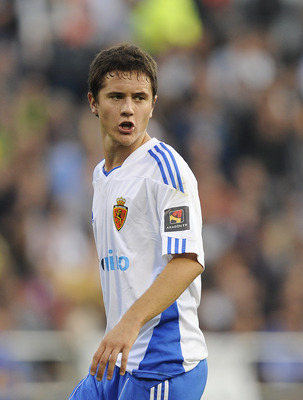
Talent Scout: Ander Herrera

Athletic Bilbao have always had a problem when it comes to signing players. Their Basque-only rule has significantly reduced their talent pool in comparison with other clubs; even Real Sociedad abandoned their cantera policy in 1989 by signing John Aldridge.


How glad the Athletic administration must have been when they witnessed the flowering of a young, Basque footballer in La Liga, as in front of them lay a talented midfielder who they could snap up. Athletic seized their chance this January, signing Ander Herrera for an initial fee of €8.5 million to help their push towards the glistening, luxurious and profitable world of the Champions League.


Name: Ander Herrera Agüera
D.O.B.: 14/08/1989
Age: 21
P.O.B.: Bilbao, Spain
Position: Central Midfielder, Attacking Midfielder
Club: Athletic Club
National Team: Spain
Previous Clubs: Real Zaragoza

It seems somewhat fitting that Ander Herrera would sign for Athletic Bilbao. It was, after all, his local team. And Ander would also play with other young talents at Athletic such as Iker Muniain, 'the next Messi', and Javi Martínez, the driving force of the side and a player who featured in the World Cup winning Spain side.

Ander would also add something different to his new side, as Athletic play a physical style of football which is ever present throughout Northern Spain. 
Sure, Athletic aren't as physical as some (actually a lot of) Premier League sides, but compared to clubs such as Barcelona and Villarreal who love to spend time on the ball they rely more on pace and strength. 

Ander Herrera would be an exception to that rule despite being 5'11. His main style of play is technical and he possesses a feel for the ball that is reminiscent of Iniesta. Ander also plays like his senior Spanish counterpart, as his main game is creating chances and providing assists, as Ander has vision on the ball which would be hard matched anywhere, even in Spain. Hence, Ander can play through balls, splitting the defence, to allow a striker through on goal.

This would benefit him in Athletic as Gazika Toquero would run after every ball played to him and Iker Muniain can use his pace and skill to cut in from the left to receive an Ander through-ball. 

Along with his passing ability, Ander is comfortable on the ball and can dribble past players displaying close control and a splendid first touch. Don't, however, expect any Messi-like dribbles to goal as his speed and ability to beat his man isn't sufficient enough to do that and most drives through the centre would be left to Javi Martínez.

One problem for Ander would be whether he would be able to force his way into the Athletic side. The Basque club are currently fifth in the table and are doing well, so they wouldn't want to change too much. Furthermore, Joaquín Caparrós currently employs a 4-4-2 with Martínez and Gurpegi at Centre-mid with the latter playing as an anchorman. Ander won't be able to oust Martínez from his role and he won't be able to replace Gurpegui as Ander can't play as a holding midfielder. Hence, putting Ander in the side would either place him out of position or change the system. Another suggestion would be to play Ander in Martínez's current role and moving Martínez to holding midfielder, but that would be a waste of Martínez's talent. The only viable option of accommodating Ander in the team would be to change the formation, possibly to a 4-5-1, which would mean disrupting Athletic's successful system. 

Strengths:
  • Has a vision of a hawk to pick apart opposition's defenses and create chances
  • Can control the tempo of the game so he can suit various tactical systems
  • As he is 5'11, Ander can shield and protect the ball away from the opposition
  • Despite his main focus of creating chances, Ander can also finish them as well
Weaknesses:
  •  Lack of speed and stamina means he cannot patrol the midfield and close down other players
  • Defensive problems means he can be a viability for a team trying to close down a game
Verdict: 

A player who is very comfortable on the ball, Ander Herrera should become one of the best midfielders in the La Liga one day

Ability: 6.5/10
Potential: 8.5/10


Monday, 7 February 2011

The Decline of Sampdoria

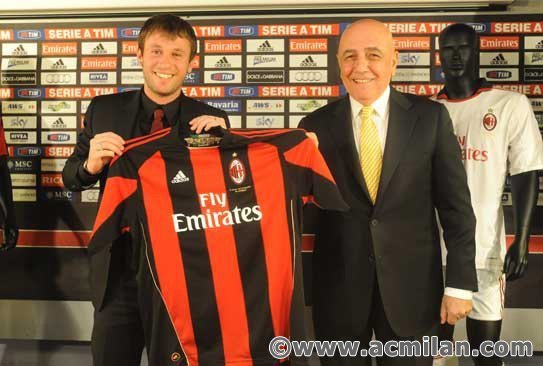
Courtesy of www.acmilan.com
If a team loses its best player, it will impact them greatly. If a team loses its best two players, however, they are destined to struggle until they buy suitable replacements. Sampdoria find themselves in the latter position. With Antonio Cassano leaving the club to Milan after a foul mouthed tirade at club president Riccardo Garrone and Giampaolo Pazzini off to a resurgent Inter, Sampdoria have in return bought misfiring Massimo Maccarone and Federico Macheda on-loan, two players who have scored between them three goals in competitive football this season. Despite the fact that Sampdoria haven't scored a single goal in six Serie A matches, there still is hope for them in the path that lays ahead.


It is impossible to overestimate the importance of Pazzini and Cassano to last year's Sampdoria side. The two strikers formed the fulcrum of the team, almost leading them to the Champions League by finishing fourth in Serie A last season. 
In Cassano, Sampdoria had a creative talent, a mercurial player who could create chances out of nothing, who could severe a defence with a single piece of skill or a pass. Some even considered him the best Italian player last season, especially as the Cassano-less Italy squad finished last in their World Cup group which featured the likes of Slovakia and New Zealand; believed to be easy pickings for the reigning Champions. 
While Cassano played in a withdrawn role to the left of the Sampdoria attack, his forward partner, Pazzini, played as a natural goalscorer. Cassano created chances. Pazzini took them. A player with great finishing abilities, Pazzini was also clever in his positioning to create himself the best scoring opportunities. 
With these two players, Sampdoria looked again like the 1991 Scudetto-winning side, banishing the memories of Gianluca Vialli and Paolo Mancini away. Sampdoria were finally good again. Finishing fourth was a cause for major celebrations in one half of Genoa. This footballing Renaissance didn't last forever and the beginning of the end of it started at an awards ceremony.


At the awards ceremony in October, Sampdoria chairman Riccardo Garrone apparently invited Cassano to come and speak for an award he was about to  receive. Cassano refused, saying he had other commitments. Later, Garrone asked Cassano at the training ground dressing rooms on why he had refused to come to the awards ceremony, as it had embarassed him to give an award to player who wasn't there and seemingly didn't care about the award. Cassano, who after making his name as the food crazed love-rat at Roma, started swearing at him, according to Garrone, calling him a 'fat s**t' among other profanities. Cassano denies these allegations, but Garrone stayed unmoved and appealed to the Italian court of justice to have Cassano's contract rescinded, which was eventually rescinded from January 2011 onwards with Sampdoria having to pay 50% of the rest of his contract. A free agent, Cassano moved to Milan to join up and form a strike patnership with other controversial players, Zlatan Ibrahimović, Robinho and Alexandre Pato.

With Cassano gone, Pazzini also left, joining Inter for a reported £15 million and Jonathan Biabiny. On his debut for the Nerazzurri, Pazzini came on as a substitute at halftime with Inter losing 2-0 and subsequently scored two goals and scored a penalty which Samuel Eto'o dispatched for the Inter comeback.


The loss of Cassano and Pazzini has left Sampdoria considerably short of fire power this calendar year. In their last six games, Sampdoria have only gained one point (a 0-0 draw with Juventus) and have scored no goals. Nothing. And its not suprising. Sampdoria now have to rely on Maccarone, who for all his substitute heroics for Middlesbrough isn't a regular goalscorer, and Federico Macheda, who has only scored four goals in his proffesional career. Sampdoria have now slipped to 14th place, a shadow of the team they once were.


Now would usually come the natural end of this article. But it isn't over. Because Sampdoria have something rare which other Italian teams don't possess. A talented youth section. With Vladimir Koman and Andrea Poli Sampdoria have their midfield sorted for the next few years, with the former providing a powerful engine and the former a long term replacement for team stalwart Angelo Palombo. Furthermore, the Pazzini sale brought Jonathan Biabiny, a French winger with electric pace and a player who feautured for the Inter team regularly this season. Sampdoria also traditionally have been a team which take risks. This can be a bad thing, but since many Italian have been reluctant to play youngsters or vary their formations (it is a proffession in Italy, not just a game as we see it) Sampdoria can set themselves away from the crowd and provide something different. And they might just be successful! But don't count on them winning anything for the time being.