Follow me on Twitter

Showing posts with label Spain. Show all posts

Saturday, 9 July 2011

Transfer Round-Up: Part 1 - Spain

Clubs around Europe have approached the transfer market hesitantly; with the exception of Real Madrid's €20 million signing of Fábio Coentrão, most clubs have topped up on young players and back-up, replenishing their stocks. The rumours, however, have remained strong and come back incessantly, with transfers including Alexis Sánchez, Cesc Fabregas and Javier Pastore reported to feature large fees. Nevertheless, this article will only focus on the confirmed deals and will also contain my thoughts on them. 

NOTE: Transfers are arranged in the country in which the player is moving to and the club they are moving to. This is Part 1 and is focused on Spain's transfers. Part 2 will come out soon based on France's transfers.

Spain: 

File:Flag of Spain.svg

Atlético Madrid:

Sílvio Pereira: From Braga, €8m
A left back who can also cover at right back, Pereira is tidy in possession and is full of pace and enthusiasm when bombing forward and joining the attack. While he can link up with the midfield in possession, he lacks the ball control and crossing ability to be a full threat forward. A good addition, but not something that would have the Atleti fans drooling in anticipation and will probably not oust Filipe Luís from his starting position.

Miranda: From São Paulo, Free
While most signings from Brazil nowadays are hyped-up youngsters who burden the label of 'Next [insert superstar]', Miranda can be seen as a veteran, despite him being only 26. After an unsuccessful tenure in Sochaux, Miranda returned home to Brazil with São Paulo, and became the epicentre of a championship winning defence, playing at the centre of a back three. Clean in the tackle and composed, he will fight for a starting position at the Vicente Calderón.

Gabi: From Real Zaragoza, €3m
Gabi returns back to Atlético, his first club, but his role would probably be kept by Raúl García in the starting eleven.

Getafe:

Pablo Sarabia: From Real Madrid, €3m
Álvaro Negredo. Juan Manuel Mata. Roberto Soldado. These are just some of the names of Real Madrid players who moved elsewhere in Spain as young players due to a lack of playing time. Pablo Sarabia is no different. An electrifying left winger, Sarabia is the type of player who would often leave defenders on their backsides thanks to his trickery and close ball control. Like a lot of young wingers, he needs to improve his final delivery into the box, but he should prove to be a shroud signing for Getafe, who often turn the unwanted scraps that Real Madrid and other big teams don't want and turn them into great players. Luckily for Real fans, however, is that they have a buy-back clause in his contract, so like Esteban Granero before him, don't be surprised if Sarabia returns to Real Madrid after a spell at Getafe.

Málaga: 

Jérémy Toulalan: From Olympique Lyonnais, €10m
Arab-financed Málaga's largest signing, Toulalan, did not have a fantastic season. After being banned from the French national team as part of the disciplinary action against the player's strike at the World Cup and failing to drive Lyon to another league title, Toulalan is looking to reinvigorate his career in the Costa del Sol. Despite his moderately poor season, he still remains as one of the best defensive midfielders in the world, protecting the back four. Furthermore, at €10m, he is a good value signing for Málaga and will be fully involved in the club's push for Europe.

Nacho Monreal: From Osasuna, €6m
Monreal is one of the best left backs in Spain and has been a consistent performer for Osasuna. Due to him being only 25, he should feature in any future European competitions Málaga are looking to qualify for.

Isco: From Valencia, €6m
Isco was born and grew up near Málaga, so he would be right at place at home. Definitely one for the future, he will make a few appearances for Málaga, but won't be a starter and has been brought over from Valencia with the future in mind. Isco can play as an attacking midfielder or as a supporting striker and displays a great feel for the game, setting up teammates and has a great first touch. He needs to improve his decision making and is a risky signing for Málaga, but one day the fee of €6m may seem as a great bargain for Málaga. And its not like they are tight on money.

Joaquín: From Valencia, €4.2m
Another Andalusia native snapped up from Valencia, Joaquín, contrary to Isco, is a player who should be a star in the first team from the off. Joaquín, while he may not have fulfilled the promise he showed at Real Betis, is one of the best wingers in Spain and has come off a solid season for Valencia, shouldering some of the attack from the departures of David Silva and David Villa. Joaquín will probably add experience and leadership to a Málaga side which is being created.

Martín Demichelis: From Bayern Munich, €3m
Quite a fall from grace for Demichelis. One year ago Demichelis played in the Champions League Final against Inter, now after being shut out of the Bayern first team, has joined a team for €3m. Strong in the air and a fierce tackler, Demichelis is error-prone and isn't as composed as he could be. Could feature in midfield, especially as Mathijsen and Sánchez have been signed.

Sergio Sánchez: From Sevilla, €2.8m
While Demichelis is error-prone, Sánchez is injury-prone. Despite having never cemented a place in the first team in Sevilla, Sánchez could feature in the Málaga first team, whether at right back or centre back.

Joris Mathijsen: From Hamburg, €1m
A Netherlands starter for only €1m! While he only needs to contend with Heitinga as the best centre back for the Oranje, Mathijsen is a very good signing considering his cheap price tag. A solid if unspectacular season at Hamburg, Mathijsen should slot right into the heart of the Málaga defence.

Ruud van Nistelrooy: From Hamburg, Free
How Málaga's fans must be praying that van Nistelrooy rediscovers his form from his glory Manchester United days. Injuries have held him back in his career post-United, but he is still one of the cleverest foxes in the box and should lead the front line for at least a year for Málaga. 

RCD Espanyol:

Héctor Moreno: From AZ Alkmaar, €4m
Part of the Mexican 'Golden Generation', Moreno is a tough, no-frills defender. He tackles with bite and is relentless, challenging for every ball and hustling for possession, but Moreno is often lacking when he is in possession, unable to complete any difficult passes. Also , at 23, expect him to improve at Espanyol and possibly work on his distribution.

Juan Ángel Albín: From Getafe, €3m
Whether playing at left wing or as a supporting striker, Albín will provide goals and assists due to his close ball control and sweet left foot. Should feature in Espanyol's first team and will improve in a few years.

Real Madrid:

Fábio Coentrão: From Benfica, €20m
When he joined Benfica, he was a young tricky left winger, full of skill, but not good enough for the first team. Now, he leaves Benfica as one of the world's best left-backs and one of the best performers in the last world cup to Real Madrid's first team. Reinvented as a left back by Benfica due to his strength, Coentrão still retains the pace and the dribbling prowess he used to have when he played for Rio Ave. Defensively, Coentrão waits for the tackle instead of diving in and in attack he is deadly in the counter-attack, which should be great news for Mourinho's Real. 

Nuri Şahin: From Borussia Dortmund, €10m
It seems strange to consider a 22 year old as a veteran. But Şahin is that, having been present in Borussia Dortmund's first team since 2005, when he was the youngest player to play and score in the Bundesliga. The leader and focal point of the young Borussia Dortmund team which swept the Bundesliga, Şahin should play in the first team for Real Madrid due to his clever and precise distribution of the ball, ability to create chances for others and also chip in with his fair share of goals. An upgrade over Sami Khedira, Şahin at €10m is a great buy by Mourinho and the Real staff.

Raphaël Varane: From Lens, €10m
The opposite to Héctor Moreno, Varane is a cool and composed central defender who plays the game as if he is at least 10 years older than his age of 18. Varane has a great understanding of the game, reading the opponents passes and intercepting through balls. He is also comfortable in possession and should eventually develop into a ball-playing centre back. The emergence of Varane into the first team was the only bright part of Lens season which ended in relegation, but Varane will struggle to find playing time at Real Madrid and the best option for him and Real would be for him to be loaned out, possibly back to France, or to a lower La Liga side.

José María Callejón: From Espanyol, €5.5m
Spiky-haired left winger who is dangerous when being fed through by a cutting pass and given space to run in. Callejón has a dangerous left foot and can score from distance; he is also comfortable cutting onto his right foot when letting rip. Came from the Real Madrid youth team and like many others before him left before playing for the first team. Should be a solid back up for Ronaldo/di María.

Hamit Altintop: From Bayern Munich, Free
I don't understand this signing. While he was signed for free and is a very good player and leader, Altintop will never make the Real Madrid first team and Real have enough back up in midfield already.

Sevilla:

Manu del Moral: From Getafe, €3.5m
A speedy striker who can also play on the wing, Manu del Moral is a very good finisher who will contend for a starting spot in the Sevilla first team. A replacement for Luís Fabiano.

Emir Spahić: From Montpellier, €2m
Captain of Bosnia and Herzegovina, Spahić is a strong and experienced centre back who can anticipate chances for the other team. A lack of pace may hinder his starting chances for Sevilla, but he should be present in the first team. At €2m, he could be considered a bargain as only last year Montpellier were reportedly demanding £25m for him from Arsenal.

Piot Trochowski: From Hamburg, Free
Trochowski can play at left wing or behind the striker and possess impeccable technique, whether it be at passing, shooting or dribbling. A lack of pace and strength is his major weakness and he can be inconsistent at times. A good pick-up for free. 

Valencia:

Daniel Parejo: From Getafe, €6m
Another promising youngster who had to leave Real Madrid for first team football, Alfredo Di Stéfano himself expressed his disgust when Parejo left by boycotting a Castilla match. A very skillful attacking midfielder, Parejo is a person who should contribute for Valencia now and in the future. He replaces Isco, and is a better player than him, although admittedly Parejo is three years older. Has a great first touch and can create chances for others.

Pablo Piatti: From Almería, €8m
Brought in from relegated Almería, Piatti's arrival hints that Juan Manuel Mata may move away, possibly to Liverpool or Arsenal, as they both play as left wingers. An amazing dribbler, Piatti exudes Argentinian skill and poise and should be a good signing for Valencia. Still has time to improve, also.

Diego Alves: From Almería, €3m
One of the best goalkeepers in Spain and has been linked with Real Madrid in the past. A good shot-stopper, Diego Alves is also a good penalty saver. Will probably be in the first team, he could be the best goalkeeper for Valencia since Santiago Cañizares, and all for €3m.

Villareal:

Cristián Zapata: From Udinese, €7m
Zapata is a quick and strong centre back currently representing Colombia in the  Copa América. Strong in the air, Zapata can also read the through balls well. He often joins attacks from the centre of defence and is effective due to his pace, but he needs to improve his passing and dribbling ability to be as effective as Lúcio.


Tuesday, 22 February 2011

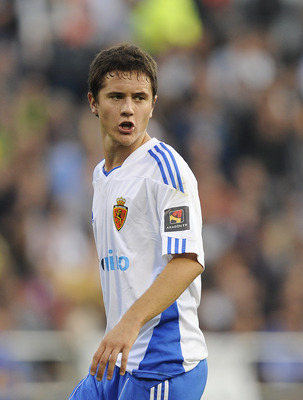
Talent Scout: Ander Herrera

Athletic Bilbao have always had a problem when it comes to signing players. Their Basque-only rule has significantly reduced their talent pool in comparison with other clubs; even Real Sociedad abandoned their cantera policy in 1989 by signing John Aldridge.


How glad the Athletic administration must have been when they witnessed the flowering of a young, Basque footballer in La Liga, as in front of them lay a talented midfielder who they could snap up. Athletic seized their chance this January, signing Ander Herrera for an initial fee of €8.5 million to help their push towards the glistening, luxurious and profitable world of the Champions League.


Name: Ander Herrera Agüera
D.O.B.: 14/08/1989
Age: 21
P.O.B.: Bilbao, Spain
Position: Central Midfielder, Attacking Midfielder
Club: Athletic Club
National Team: Spain
Previous Clubs: Real Zaragoza

It seems somewhat fitting that Ander Herrera would sign for Athletic Bilbao. It was, after all, his local team. And Ander would also play with other young talents at Athletic such as Iker Muniain, 'the next Messi', and Javi Martínez, the driving force of the side and a player who featured in the World Cup winning Spain side.

Ander would also add something different to his new side, as Athletic play a physical style of football which is ever present throughout Northern Spain. 
Sure, Athletic aren't as physical as some (actually a lot of) Premier League sides, but compared to clubs such as Barcelona and Villarreal who love to spend time on the ball they rely more on pace and strength. 

Ander Herrera would be an exception to that rule despite being 5'11. His main style of play is technical and he possesses a feel for the ball that is reminiscent of Iniesta. Ander also plays like his senior Spanish counterpart, as his main game is creating chances and providing assists, as Ander has vision on the ball which would be hard matched anywhere, even in Spain. Hence, Ander can play through balls, splitting the defence, to allow a striker through on goal.

This would benefit him in Athletic as Gazika Toquero would run after every ball played to him and Iker Muniain can use his pace and skill to cut in from the left to receive an Ander through-ball. 

Along with his passing ability, Ander is comfortable on the ball and can dribble past players displaying close control and a splendid first touch. Don't, however, expect any Messi-like dribbles to goal as his speed and ability to beat his man isn't sufficient enough to do that and most drives through the centre would be left to Javi Martínez.

One problem for Ander would be whether he would be able to force his way into the Athletic side. The Basque club are currently fifth in the table and are doing well, so they wouldn't want to change too much. Furthermore, Joaquín Caparrós currently employs a 4-4-2 with Martínez and Gurpegi at Centre-mid with the latter playing as an anchorman. Ander won't be able to oust Martínez from his role and he won't be able to replace Gurpegui as Ander can't play as a holding midfielder. Hence, putting Ander in the side would either place him out of position or change the system. Another suggestion would be to play Ander in Martínez's current role and moving Martínez to holding midfielder, but that would be a waste of Martínez's talent. The only viable option of accommodating Ander in the team would be to change the formation, possibly to a 4-5-1, which would mean disrupting Athletic's successful system. 

Strengths:
  • Has a vision of a hawk to pick apart opposition's defenses and create chances
  • Can control the tempo of the game so he can suit various tactical systems
  • As he is 5'11, Ander can shield and protect the ball away from the opposition
  • Despite his main focus of creating chances, Ander can also finish them as well
Weaknesses:
  •  Lack of speed and stamina means he cannot patrol the midfield and close down other players
  • Defensive problems means he can be a viability for a team trying to close down a game
Verdict: 

A player who is very comfortable on the ball, Ander Herrera should become one of the best midfielders in the La Liga one day

Ability: 6.5/10
Potential: 8.5/10


Wednesday, 22 December 2010

Are we Witnessing the Best Barcelona Side Ever?


Messi has been instrumental in this side's success
 - Picture Courtesy of Lobo

The stats speak for themselves. 43 points after 16 weeks. Only 4 points dropped so far. 51 goals scored in that same period. Only conceeding 9 goals during thos games which is only 0.625 per game. 10 games now won consecutively, and an 100% record away in all games to boost. The aggregate score of their last five league games: 26-1. The clubs played against: Almería, Real Madrid, Osasuna, Real Sociedad and Espanyol. In that list you have the most successful club in the world, their perennial local rivals and a top-half club. This Barcelona side completed the calender year with a record 103 points. The club also have three of their players in the FIFA Ballon d'Or shortlist, which, strangely enough, consists of only three players. What is even more remarkable is that all three of those players, Xavi Hernández, Andrés Iniesta and Lionel Messi, were brought up in La Masia, the Barcelona youth setup. Not only that, but eight of the Barcelona first team that obliterated Real Madrid 5 - 0 came from La Masia and six of the Spain first team that won their first World Cup earlier this year came from the same youth academy. It is also important to remember that this Barcelona side is practicaly the same one that won six out of six competitions they competed in a year ago. No-one in history has rivalled that. 

So for all of the statistics and beautiful football they play, are they the greatest Barcelona side ever? The Catalan side are no strangers to great stars and teams, so they will come up under tough opponents. 

The first successful Barcelona side came about in the early twenties, spearheaded by Josep Samitier. The native from Barcelona played in central midfield, and according to many, pioneered leading from the back in the midfield general role. Up until then the key players in Spain were the forwards, who were strong and big, like Pichichi, playing the characterstically tough football found in Northern Spain. No tiki-taka found at that time. Samitier was a great all-round footballer, capable of scoring 326 goals for Barcelona while also being ruthless in the tackle. He was also the highest paid footballer in Spain by the mid-twenties.
Barcelona weren't just funding Samitier's night life, however,  they also enrolled Ricardo Zamora, a promising 19-year goalkeeper old from rivals Espanyol. Zamora was a great goalkeeper, but like Samitier, moved to Real Madrid afterwards. Zamora's performances for both clubs have led to the award to the best goalkeeper in Spain to be named after him, as 'Pichichi' is for the top scorer. 
The Barcelona side of the twenties also had a key goalscorer: Paulino Alcántara. The Philippines-born striker of part Spanish inheritance is the all time top scorer for Barcelona, having netted 357 goals in as many games.
In the three years that all of those players were together, the club won three Capionat de Catalunyas and two Copa del Reys. There was no La Liga to win, as it had been created in 1929, which Barcelona with an aging Samitier won. 

The next great team Barcelona had arrived with a Hungarian in the back of a truck: László Kubala. Born to a working-class Slovak family in Budapest, Kubala was a talented footballer with excellent dribbling skills. In his early career Kubala turned out for popular clubs in Central Europe such as Ferencváros, Slovan Bratislava and Vasas. 
He left Hungary in January 1949, as the Soviet Union consolidated its sphere of influence over Eastern Europe. Kubala, fearing Communist control, fled Hungary in the boot of a truck and arrived in Allied-control Austria. He then moved onto Italy to play for Pro Patria and Torino, just before the dreadful Superga air disaster which wiped out a whole generation of talented footballers. Soon Hungary appealed to FIFA as Kubala had fled, leaving him unable to do national service. FIFA consequently issued him with a one-year ban. 
Kubala then started a football team with Ferdinand Daučík in 1970 called 'Hungaria', which was made up of refugees from Eastern Europe. Hungaria toured Spain, and it was there that Samitier, now a scout with Barcelona, lay eyes upon the Hungarian.

Samitier wasn't the only scout watching Kubala, Real Madrid were as well. Apparantely, Samitier used his warm relationship with Dictator Franco to secured Kubala's move to Barcelona instead of the Hungarian moving to Real Madrid. This suggests that Franco didn't hate Barcelona that much, or at least valued his relationship with Samitier highly. Nevertheless, Kubala signed for Barcelona with Daučík appointed coach. Due to the one-year ban he had with FIFA, Kubala only started playing competetive football for Barcelona in 1951. 
Within his first season, Kubala had scored 26 goals in 19 games and had established himself at Barcelona. He defined the club during the 1950s, a decade that was overshadowed by Real Madrid's growing success and the Di Stéfano transfer saga. One theory for the Argentine's snub of Barcelona was because it was believed the club wouldn't be big enough for him and Kubala. Towards the end of the decade, however, Barcelona emerged from the shadows, with a certain pre-catenaccio Helenio Herrera in charge of the side. Fellow Hungarians arrived, such as the prolific Sándor Kocsis and skillfull Zoltán Czibor, both part of the Magical Magyars side that dominated the early 50s of football. 
Another member of that Barcelona side was Luis Suárez, a Spanish midfielder who was a fantastic passer of the ball. He won the Ballon d'Or in 1960 as a Barcelona player and went on with Herrera to Internazionale, were that team dominated Italian and European football. 
Barcelona won La Liga and Copa Generalísimo in 1959 and La Liga and Fairs Cup in 1960. They then went on to reach the Champions League final a year later, losing 3-2 to Benfica and the golden boot of Eusébio.

In 1988 Barcelona decided to revert to a club legend to coach the team in Johann Cruijff. With him, the Dream Team was born and some of the most successful years for Barcelona were under his tutelage. 
Cruijff blended a mix of Spanish players and luxury foreigners to help the side win its first ever European cup. In goal featured Andoni Zubizarreta, the record cap-holder for the Spanish national team and former Athletic Bilbao player. Other Basques, such as José Mari Bakero, Txiki Begiristain and Andoni Goikoetxea played for the club regularly.
The leader of the side and current manager, Josep Guardiola, was a lifelong supporter of the club and a Catalan. He joined La Masia when he was thirteen and started out on the right-wing. When Cruijff was watching him player for the youth team, he told Rexach, the youth team manager to play him in the middle. The change worked and Guardiola played the general role created earlier by Samitier to full effect, bossing the midfield. 
With the Spaniards came the addition of foreigners, some of whom were the greatest players in the world. Ronald Koeman played at centre-back for Barcelona and possessed a fierce shot coming forward. His presence in defence helped sturdy a very fluid and attacking team, carried on by Cruijff from the totalvoetbal days of the seventies. 
Hristo Stoichkov, who unlike Kubala left Eastern Europe after the 1989 revolutions, played for the Dream Team. Had Bulgaria been a Communist country, Stoichkov may not have left to play abroad, with footballers in the Eastern Bloc not allowed to leave until they were 28 years old. It is for that rule that players such as Ference Puskas played out their best years in Eastern Europe instead of moving to the richer leagues which many young players decide to do nowadays. Stoichkov was a player of fantastic technique and touch, a player that went in hand-in-hand with Cruijff's vision of football. 
Another player which did so was Michael Laudrup, a player who won the European Championship with Denmark in the same year as winning the Champions League for Barcelona. 
It was the Champions League win in 1992 in Wembley which defined this Dream Team, for they were the first Barcelona side to win the European Cup. It was thanks to a Koeman free-kick that they overcame Sampdoria in extra time.The trophy had eluded them until now, forever written next to Real Madrid's name.To win it now was a great relief for the whole club.
The success the Dream Team had was also a symbol of Barcelona's revival after the Franco years as a major cultural centre. 1992 was the year when the Olympics were held in Barcelona, were the other Dream Team which was the USA Basketball team dominating play. Artists began to flock to Catalonia and Barcelona had a successful team once again.

There has been difficulty in deciding the greatest ever Barcelona team as there will always be in judging football across time periods. Unless you have seen all of the teams mentioned, from 1920 to 2010, how can you possibly decide which is better. I myself have only been alive to see the current Barcelona side play in this list. Most of the assumptions you make on former teams are based on articles and people reminiscing. Furthermore, all the teams mentioned in this article have a honourable claim to the title. 
I, however, believe that the current Barcelona side are the best Barcelona side that has ever been. Which team can lay claim to La Liga, Copa del Rey, Supercopa de España, Champions League, European Supercup and World Club Cup at the same time? Which side can have the record amount of points in La Liga? The answer is in the question. I may be biased, having lived to see this great team, but there are reasons behind it.

Monday, 29 November 2010

Barcelona 5 - 0 Real Madrid: Match Report

Catalonia vs Castilla. Left-wing vs Right wing. The rebels vs the aristocracy. Guardiola vs Mourinho. Messi vs Ronaldo. The best youth team in the world vs the Galácticos. Second in the table vs First in the table. This match epitomises all of these and means so much more to the respective fans involved. It is of course El Clásico. And what a game it was.

Starting Line-ups:
Barcelona:
1 - Víctor Valdés
2 - Daniel Alves
5 - Carles Puyol
3 - Gerard Piqué
22 - Éric Abidal
16 - Sergio Busquets
6 - Xavi
8 - Andrés Iniesta
17 - Pedro Rodríguez
7 - David Villa
10 - Lionel Messi

Barcelona played with their familiar 4-3-3 formation which has been the mainstay of their team for many years. Abidal was picked in front of Maxwell, mainly because Pep Guardiola wanted to play with a quick left-back to counter the pace posed by Ronaldo or di María on the flanks. Messi continued to play in his 'false nine' role with Villa feeding off behind him.

Real Madrid:
1 - Iker Casillas
4 - Sergio Ramos
3 - Pepe
2 - Ricardo Carvalho
12 - Marcelo
14 - Xabi Alonso
24 - Sami Khedira
22 - Ángel di María
23 - Mesut Özil 
7 - Cristiano Ronaldo
9 - Karim Benzema

Gonzalo Higuaín was left out in favour of Karim Benzema as he was unfit for the game. Real Madrid also played with their usual formation, 4-2-3-1. Khedira and Xabi Alonso provided protection to the back four while also bringing the ball out of midfield. At times Ronaldo and di María swapped sides, particularly early on.

Opening Minutes: Barcelona Domination:
Barcelona completely ran over Real Madrid in the first few minutes, controlling 75% of the possession in the first fifteen minutes. Messi played the 'false nine' role he was employed in throughout this season, coming deep to receive the ball. Barcelona took the lead through this way as Messi came back to pass a diagonal ball to Iniesta, who in turn played a diagonal pass into the six yard box where Xavi pounced after a Pepe mistake to lob it over Casillas. 
Barcelona played a lot quicker while Real Madrid often dwelled on the ball. Both teams pressed strongly against each other, but Barcelona's superior first touch allowed them to spend more time on the ball and thus giving them a better chance of playing an accurate pass. 
David Villa was a dribbling presence on the left, feeding off the space vacated by Messi and he set up the second goal in the 18th minute after sending a hard, low cross into the six yard box where Casillas fumbled into the path of Pedro, who gratefully tapped the ball in. By now Real Madrid were deflated in their play and half time seemed to arrive too late for them and Mourinho.

Second Half Changes: Problems for Real
Barcelona simply out-passed Real Madrid in the centre of midfield, as Khedira and Xabi Alonso were no match for Xavi and Iniesta. The lack of a ball-winning midfielder also posed problems for Real, as neither Xabi Alonso or Khedira looked close to dispossessing Barcelona's midfielders. To combat this, Mourinho took off the ineffective Özil for Lassana Diarra, who would hopefully help Real Madrid gain possession in midfield and control the ball. 
This didn't solve the problem created by Messi, however, as the World Player of the Year continued to drop deep. This posed a problem for Real's centre backs. If they continued to mark Messi, they would leave space behind them. If they stayed back, Messi would be given too much time on the ball to pick a pass and suddenly with him in midfield, the three midfielders of Real Madrid would be outnumbered. 
For the third goal, the Real defence decided to follow Messi and he played a perfectly weighted pass for Villa to run on to and stroke the ball into the bottom corner. Real Madrid needed to chase the game more, so they pressed higher up the pitch and Real Madrid's centre backs stood off Messi. This gave the Argentinian time to play the ball through again past the back line for Villa who poked the ball through Casillas' legs. 
The last goal was scored in added time as Bojan emulated Villa and squared the ball for fellow substitute Jeffrén to put the ball in the net.

Tempers Flare:
Late in the first half Guardiola held the ball on the touch line. Cristiano Ronaldo wanted the ball given to him straight away, but Guardiola put it to the side of Ronaldo, who subsequently softly pushed the Barcelona manager. The rest of the Barcelona players overreacted, surrounding Ronaldo and exchanging words (probably unpleasant) with him. Víctor Valdés ran up to confront Ronaldo, incensed at his acts.
Just before the half time interval, Messi was behind Carvalho. The latter jerked his elbow back and his upper arm hit Messi's face. Messi fell to the ground needlessly and received a yellow card for his troubles.
In the last minute of added time with Lionel Messi nonchalantly dribbling through the middle, he was hacked by Sergio Ramos. The Real man then promptly proceeded to push Puyol to the ground, received a red card and put his fist under Xavi's chin while walking off the pitch. A red card on three occasions. Ramos does like to do things in style.

This El Clásico will live long in the memory and ranks up there with the 6-2 drubbing a year back. Real's great form into the lead up of this game will seem a distant memory as Mourinho will try to uplift his side and motivate them once more. This game was not only a victory for Barcelona, but also for their ideal, of short passing, movement and flair.

Statistics:
Barcelona                        Real Madrid
67%         Possession       33%
11            Shots              4
7             Shots on target 2
3             Corners            6
5             Offsides           2


Scoring List:
Xavi 10'
Pedro 17'
Villa 55'
Villa 58'
Jeffren 90+1'


Click here for highlights

Monday, 22 November 2010

Barcelona and Real Madrid on form before the 'Clásico'

If there was any confirmation that there were only two teams with a shred of a hope of winning La Liga, Saturday evening was that. Barcelona thrashed Almería 8-0 away while Real Madrid easily overcame Athletic Club 5-1. Both Lionel Messi and Cristiano Ronaldo scored hat-tricks in those games to affirm their status as two of the world's best players today. All eyes are now on the Clásico on Monday as L'equip blaugrana and Los Blancos will battle it out for the top of the table.

Which club side can match the flair of Barcelona's play, the creativity of their players and the fluid transition between players on the pitch? Many people will have to think back to the Ajax sides of the '70s, where Cruijff and co. established totaalvoetbal on a global scale following three consecutive Champions League victories. And it is with the help of Cruijff and Rinus Michels, the Ajax manager at the time, that the brand of football Barcelona advocate now, such as pressing, interchange of formations and manipulating the space on the football pitch, is in place. With the help of those two Dutchmen, Barcelona won the Spanish division in 1974 with attacking football, and have remained engraved in Catalan history. Johan Cruijff often sees himself as a Catalan; he was appointed manager on non-FIFA affiliated Catalonia in 2009; and is a fierce exponent of positive football. His and Michel's legacy is firmly in place in Barcelona, with them winning 8-0 over Almería with a magnificent, attacking display.

For as Almería can be embarrassed about their performance on Saturday, Barcelona can be equally pleased about the manner of their performance. They played short, precise football while waiting for the right delivery into the box, where Pedro, Villa and Messi were waiting to pounce on goal. The first goal was especially well-crafted, with Messi passing it to Villa, the latter flicking it back to the Argentinian, who then drived a fierce shot into Diego Alves bottom corner. If Diego Alves could do nothing about the first goal, he didn't exactly cover himself in glory with fourth and seventh goals. For the fourth goal, Diego Alves was slow to come of his line after a fantastic lofted pass from the young Andreu Fontàs found the feet of Pedro and the goalkeeper left a large gap for Pedro to slot the ball into the net. The seventh goal occurred after Diego Alves fumbled a long shot from David Villa into the path of Lionel Messi who gratefully grabbed his hat-trick. While Diego Alves had a poor game, Almería were abject. Their defence had no shape to it and the team looked degraded and slow in their reactions boosting Barcelona's confidence before the big game.

Real Madrid would have also had a massive confidence boost after beating Athletic Club 5-1, with poster boy Cristiano Ronaldo scoring a hat-trick. While Barcelona are slow and measured in their approach, Real Madrid play with such alacrity that opponents can't keep up with them. Ronaldo and Di María add a lot of pace down the flanks for Real Madrid, which resulted in a fabulous second goal for them. After a corner from Athletic, Ángel di María laid the ball forward for Gonzalo Higuaín who ran down the right flank, past the halfway line, and in turn lofted the ball towards Mesut Özil, laying in turn off for Cristiano Ronaldo to crash home. It was the perfect example of how Real Madrid play, dominating the game and pressing their opponents. Ronaldo also scored a free-kick and a penalty to complete his hat-trick, leaving him with  fourteen goals in twelve games, in front of Messi in the running for the Pichichi trophy, who is on thirteen goals for the season. 

The Clásico next week will be actually played on a Monday, for the first time in its history. The reasoning behind it will be to publicise games on Monday, as the Spanish public have mostly turned a blind eye to games on that day. The two best teams in the world will meet then, with the whole world watching. Will Barcelona overtake Real or will the Blancos hold on firm at the summit of the table? Will Real Madrid finally come out of the shadow of Barcelona's treble win in 2009? Watch on Monday and you will find out